









Murtaza Hussain On Immigrant Politics

Liberals and progressives have very strong faith in their assimilative powers. Elites share the same transnational culture, they are a class unto themselves. There is a parallel between Baathist curation of a diverse elite and the current diversity-represented liberal elite. Immigrants tend to be more socially conservative and religious (examples: Caribbean, South Asia).

Immigrants can also be very patriotic (anecdote of a call centre co-worker who would hum the national anthem to himself every day). In general, immigrants reject “avant-garde” progressivism. Immigrant conservatism makes the democratic coalition untenable. Immigrants show up to the USA and are excepted from black/white racial politics.

The party saying “law and order” sounds good as many immigrants live in poorer and high crime neighbourhoods. Eric Adams, the former cop and mayor of New York, was voted in by black and ethnic votes in Brooklyn. The things that progressives see and assert as obvious are not apparent from a minority/immigrant perspective.

Trump got one third of Muslim votes in 2020. Muslims were triggered by social issues as they have conservative views on sex and family. Trump is a macho guy and some immigrants like a macho leader and want a tough seeming president, the Democrats are “a little limp”. Some successful immigrants have a business-libertarian view and this can also play into machismo.

With American seculars, a huge amount of weight is put into politics. It’s actually good that there isn’t a pure racial divide in politics. Avant-garde liberalism is patronizing, unstructured, diffuse and suffers from purity spirals. Local Republican representatives and officials say “we like you” and apologize for and contextualize Trump.

It isn’t good to teach kids into racial polarization (as avant-garde liberalism does) and imply a racial/moral hierarchy. Avant-garde liberalism is like a religion and its adherents are extremely pious. Which current left-wing figure is funny? The left-wingers used to be the funny ones, Trump filled the vacuum and the left has become even more righteous in response.
Martin Gurri on Generation Z, Elites & Institutional Change

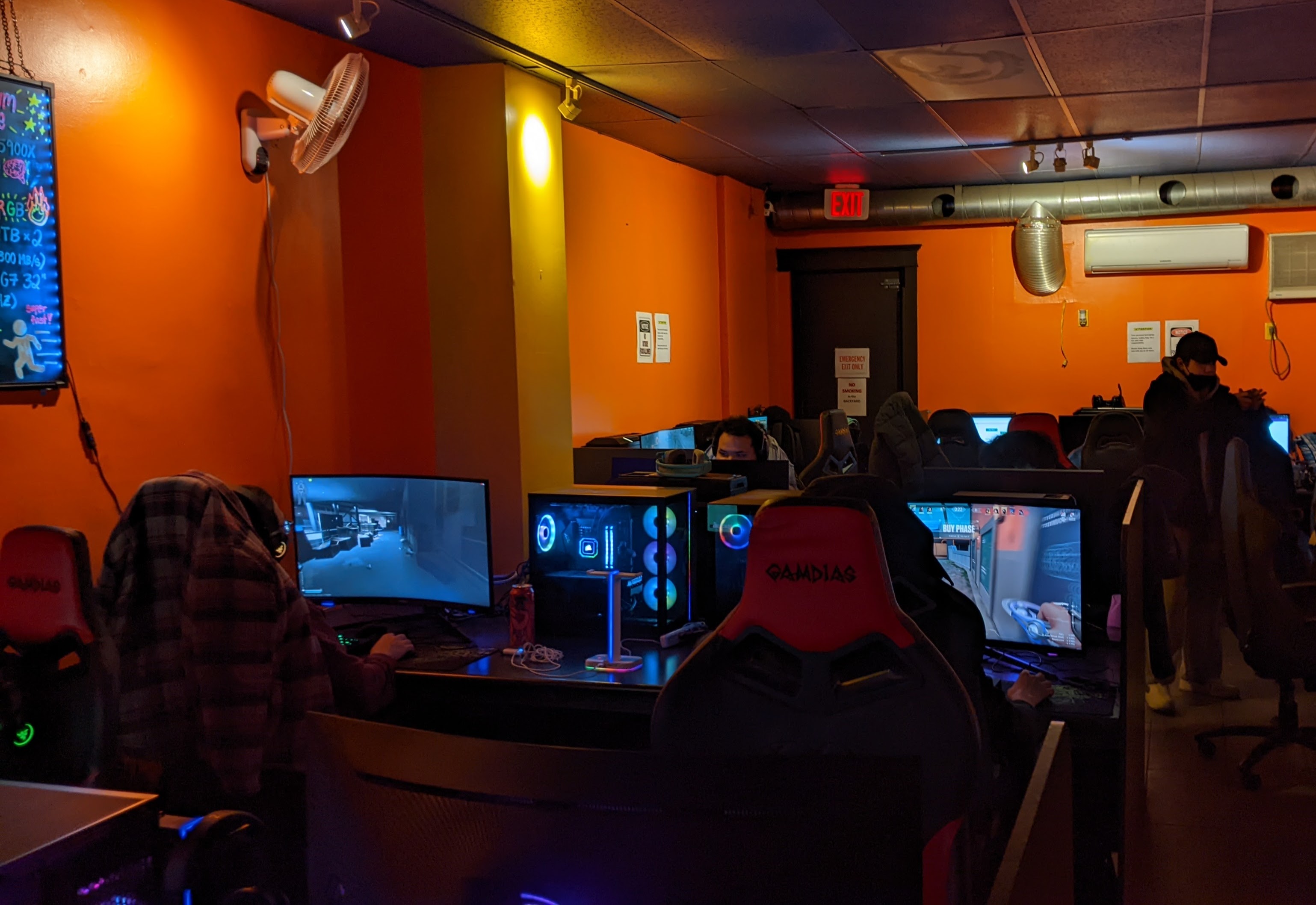
Young men in an internet cafe, December 2022.

20th Century institutions have no idea how to deal with 21st Century virtual-world young people. The elites in the 20th Century had it good but the “digital tsunami” has blown everything up. The elites want to talk about “matters of control” and regulation (global warming etc.) whereas the public is concerned with the economy. We have to think about what we want left after the digital revolution. Online, you are decontextualized, ahistorical, flattened, your digital self is “mutilated”, everything is fluid and open to any behaviour (you have no more “imperative”). This is how Generation Z has grown up. The Pentagon leaker testifies to this view: he got top secret documents and showed them to his friends online “look what I just saw”. For this generation, “history is where bad things happened” and you can’t learn from it, only repudiate it. On the internet “you’re just you”, the old broadcast/institutional ways of communicating are dead. What’s the solution? We need a better elite class rather than the current reactionary/defensive elite class.

Tim Wu On AI And Employment

A thirtysomething man engages ChatGPT, 2022.

AI (immediately at question are ably-creative Large Language Models like ChatGPT) will result in less meaningful work. The quality of work matters because it substantially impacts the quality of general life. Predictions that past technologies would create much more leisure didn’t pan out and now we have meaningless work (David Graeber’s “Bullshit Jobs”). We have a culture and an economy obsessed with output and so make work. E-mail made the workday never ending without necessarily making people more productive. AI will make skilled workers “middle managers” who oversee their work at greater scale. We have to make AI respect humanity through “collective will”.
Waiting for Ricky Tantrum by Jules Lewis (review)

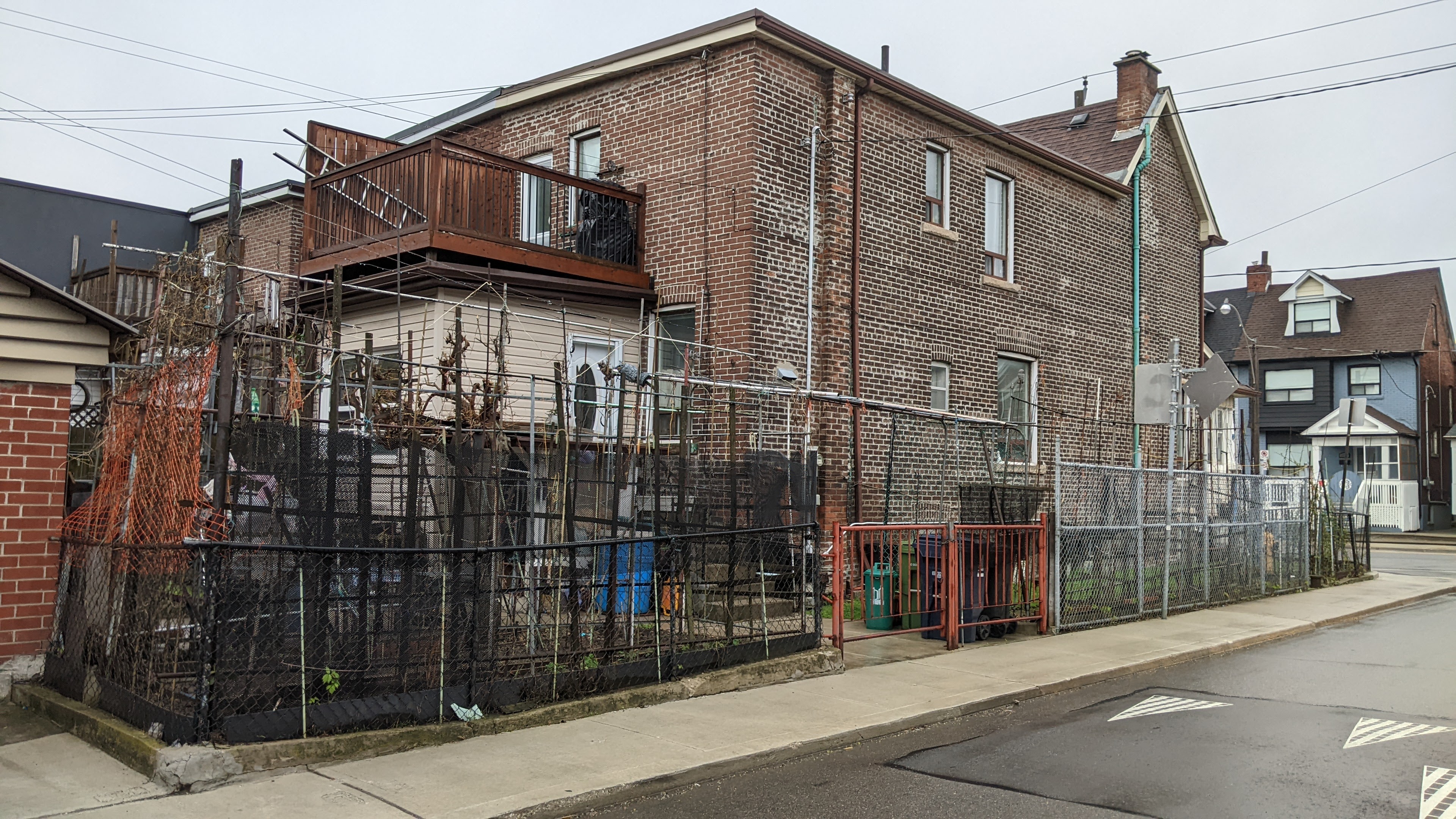
Many classic scenes persist in the new Old Toronto.

This work takes place in approximately my childhood neighbourhood about ten years ahead of me. Those ten years made a big difference: what was an immigrant working-class environment became middle class in only about twice as much time. While it has adult themes, the book is borderline “young adult” as there is little introspection. That said, the main characters lack of quality guidance and his role as a passive receptacle for the adult refuse around has melancholic weight to it. I was very glad to encounter my high school gym teacher and soccer coach immortalized on the page. Some characters you can’t make up.

Feminine descriptions: “peacock eyes and pouty lips”, “crimson, puffy, moist”, “droopy, loose-lipped, hound-doggish”, “snooty, racoon-like”, “perky, poodleish”, “her soft pastel fingers”, etc.

London’s Overthrow by China Miéville (review)

This is a pretty good tiny book. The author walks around London pondering social decline and the possibility of chaos. Accompanying amateur-smartphone photos are evocative. You get a taste of London culture, local history and the bleak vibes post-2008. The standard left-wing issues/critique/efforts xylophone is played eloquently. The book came out in 2011 in the aftermath of a decent amount of upheaval (the 2010 student protests and 2011 youth riots) and it occurred to me that the right-wing has dominated UK national politics ever since. How significant was this restive period beyond the well accounted for?

Great vocabulary: scabrous, grimoire, gallimaufry, hecatomb, parlous, cloacal, lachrymosity etc.

I Can Hear You, Can You Hear Me? by Nolan Natasha (review)

This is an OK tiny book of poetry. It’s cozy and comfortable. Think along the lines of “tangled in bedsheets and your soggy feet”. The word “sheets” (as in bed/hotel) is literally used at least five times. Also, we’re talking Canadiana to the point of a poem written from the perspective of someone watching their lover shovel snow (one of the better poems). Cross-country poetry. These Stephen Marche quotes are somewhat relevant:

“She also represents most fully the Canadian obsession with the landscape. It’s the great cliché of Canadian culture, but it’s a cliché because it’s true. There has never been a great portraitist in the history of Canadian art. Landscapes are everywhere.”

“The ‘imaginative problem’ of Canadian literature is always the setting. We are afflicted with the portraits of small towns, the portraits of farm life, the portraits of Maritime rivers, the portraits of the prairie. Landscape intrudes into even the most domestic of narratives.”

Martin Amis in Time’s Arrow on Deindustrialization in Reverse

In Time’s Arrow time is moving backwards.

“The parallaxes of the stockyards shift and quake. Industry is coming to the city. Gas is cheap. Things move faster than they used to. The insane have been taken off the street; we don’t ask where they’ve disappeared to. Never ask. It’s better if you never ask. No longer the nomads, the nightrunners . . . Instead there is a burly altruism abroad. People all have jobs now, at the steel mill and the auto plant. They wash the wind. Just as they clean up all the trash and litter, they also clean up the earth and the sky, transmogrifying cars, turning tools, parts, weapons, bolts, into carbon and iron. They’ve really got to grips with their environmental problems, facing them squarely, with common purpose. Time for talk is over. There is no talk. Just action. To total sickness you bring total cure. Now there’s less room for thought and for feeling, and it seems a great tiredness is good for keeping people steady. Work liberates: Friday evenings, as they move off toward it, how they laugh and shout and roll their shoulders.”

“How Toronto Lost Its Groove” John Lorinc’s Toronto Mega-Take 10+ Years Later

“Yet in Toronto… well, Torontonians complain endlessly about congestion but refuse to give their political leaders the tools to do anything about it. They boast about the city’s ethnic diversity but don’t much mind if immigrants are warehoused in vertical ghettos. They aspire to live in a creative-class city with serious cultural ambitions, but only if they can pay Walmart prices.”

  • Gridlock and congestion have major costs in lost productivity, no transit improvement so roads “bursting”.
  • Sprawl continues unchecked, increasing cost of municipal services.
  • “Should the rest of Canada care? Yes, because the GTA is the country’s economic hub, accounting for one-fifth of its gross domestic product; New York, by contrast, produces just 3.3 percent of the United States’ national income.”
  • “…tens of billions more in tax revenues flow out of the GTA than come back in the form of services and public sector investment, which means GTA wealth subsidizes government services across Canada, including health care and social security.”
  • METRO Toronto was created in 1953 and seen as a success, admired.
  • Bill Davis established two tier government in the 905 and this was the GTA’s “original mistake” as powerful municipalities compete for public and private investment
  • In 1994 Ann Golden proposed a Greater Toronto Council for greater services (transportation, waste management, and economic development), leave lesser services for cities (essentially METRO for the GTA).
  • “Despite Harris’s ambition to reduce government, the GTA remains staggeringly over-governed, with 244 municipal office holders, including twenty-five mayors. By comparison, New York, with 8.3 million residents, is governed by fifty-one councillors, five borough presidents, and just one term-limited mayor.”
  • The Ontario government is reluctant to create something like a Greater Toronto Council as it doesn’t want a political rival or to be seen as favouring the GTA.
  • “But in the 1980s and 1990s, as development took off north and west of Toronto, the municipalities of Vaughan and Markham enthusiastically pursued beggar-thy-neighbour tax policies that enticed businesses to avoid or flee Metro and its higher commercial and industrial taxes. The result: a slow but painful decline in Metro’s non-residential tax revenues; growing tracts of fallow land; and fewer jobs in the inner suburbs, such as Scarborough and East York.”
  • Harris took responsibility for education from municipalities and downloaded transit, housing, parts of welfare.The TTC was aging at this point and province absolved itself, services were cut and plans stopped.
  • TRBoT study predicted 1billion shortfall by end of decade and suggested cut/priv. vs. new revenue “sales taxes, hotel occupancy levies, and parking fees” suggested by others (David Miller brought in vehicle registration and land transfer taxes).
  • The Ontario government spent on commuter rail and bus service, municipalities did not invest.
  • None of what was proposed in the 1975 Metro Toronto Transportation Plan Review was built, Network 2011 (1985) included three new subways. Harris cancelled one and only partially funded another. Harris believed transit should be funded by munis but eventually reversed and funded GTA commuter rail.
  • Liberals/McGuinty set up Metrolinx in order to take the politics out of transit planning (vs. Greater Vancouver’s TransLink, Metrolinx does not have predictable revenue, relies on provincial govt.)
  • The argument for David Miller’s Transit City: bring LRTs to suburban areas that could not support subways at 1/10th the total cost. Province, initially on board, scaled back funding and Ford cancelled all lines but one (Eglinton) and said to go underground. The same politicians who approved Transit City approved Ford’ in gutting it’s gutting of it.
  • The GTA is the world’s most ethnically diverse metro by proportion of foreign born residents, four in ten immigrants to Canada settle in the GTA.
  • Class polarization: Hulchanski study and decline in middle income neighbourhoods.
  • The GTA takes the lions share of immigrants but lacks the resources to absorb them.
  • In the 1970’s a federal Liberal government built co-op housing, in 1980’s Mulroney pulled out, Chretien continued cuts in 1995 and Mike Harris downloaded housing.
  • Affordable housing now has a “market-oriented, self-financing formula”.
  • Affordable private rental has not been built so many immigrants live in 1960’s towers “Toronto contains more suburban high-rises than any other North American city”.
  • A 2006 report called Poverty by Postal Code 2: Vertical Poverty highlighted spartan buildings, disrepair.
  • The 2005 Greenbelt Act and Places to Grow Act set a target of 40% of new development into urban areas.
  • “virtually no connection exists between land use and transportation planning”
  • 2011 study: 54% percent of GTA’s 200 million square feet of office space is far beyond the reach of rapid transit.
  • “The net result: Toronto, like many large North American cities, is now ringed by a huge band of intensely car-dependent suburbs.”
  • Development charges treated infill and greenfield the same, effectively subsidizing sprawl.
  • Kyle Rae pushed for expropriation to create Y-D square, politicians and landowners fought the vision but he prevailed. Kyle said/says “we have a culture of no”.
  • Toronto has a poor public realm, trash cans are bad, trees die.

“Six decades after the beginning of its epochal postwar transformation, it’s fair to say that Toronto has become a very big city, and a somewhat accommodating city, but not a great city—at least not yet. Which is more than a little strange, because the GTA contains an abundance of talent and energy, tremendous wealth, and intimations of a distinctly Canadian cosmopolitanism. What’s lacking is the will to abandon the story Torontonians have always told themselves, which is that they can’t afford the things big cities need and crave, that they mustn’t exercise the political clout that naturally accrues to large urban regions, and that they shouldn’t manage growth in the intelligent way that the twenty-first century requires.”

“Fixing Our Public Transit” with Reece Martin (RMTransit) & Arash Oturkar

These are notes from a panel at Hart House (UofT) hosted by the Hart House Student Social Justice Committee. The speakers are noted transit commentator and Youtuber Reece Martin and Arash Oturkar of CreateTO. Remarks aren’t always specifically attributed and this is not a comprehensive record.

  • CreateTO is an arms length agency of the city set up to manage it’s real estate portfolio.
  • Lots of plans: The Planning Act, the Provincial Policy Statement, the Growth Plan, the Official Plan, zoning by-laws and other guidelines.
  • Transit-supportive development: the growth plan includes MTSA’s (more significant within the Greater Golden Horseshoe). The Building Transit Faster Act includes four priority projects in the GTA (the Scarborough subway, Eglinton, the Ontario Line, Yonge North). Also relevant: the Transit Oriented Communities Act.
  • Transit Oriented Development (“TOD”) is site specific vs. Transit Oriented Communities which encompass a wider district.
  • All cities are required to have an official plan. The Toronto official plan identifies MTSAs as sites with major transit nodes in ten minutes walk or 500-800 metres (basically the transit lines already and those coming).
  • Parking too expensive/wasteful. The cost of underground parking space is 50k to 160k and two parking spaces take up the space of one apartment. The cost of construction is passed on to households (Toronto got rid of parking minimums).
  • Other planning considerations: Toronto Green Standards (transit and active transportation), RapidTO (Kingston Rd.), Toronto Poverty Reduction, Vision Zero, King Street Transit Priority, Bike Share, ModernTO.
  • Transit in the downtown core is three times better vs. the inner suburbs.
  • 36% of total emissions are from transportation, 80% of that from private vehicles.
  • Big picture: TOD is DENSE AND MIXED DEVELOPMENT BY TRANSIT.
  • Housing Now is investing in city-owned land to create affordable housing.
  • Bloor-Kipling “Six Points” (Bloor, Dundas, Kipling) was originally built in the 1960’s (car oriented). It’s a bad neighbourhood for pedestrians as areas were/are disconnected. The city intended to connect it (a two decade project of reconfiguration including simplified pedestrian way-finding for ex.).
  • Redevelopment includes a new Etobicoke Civic Centre, 2300 residential units, an elementary school, district energy. This is in partnership with a private developer.
  • 158 Borough Dr. in Scarborough Centre: a parking lot turned into housing that will have 650 units and a daycare. In walking distance of Eglinton and a future subway station.
  • Borough Dr. currently has fast vehicle speeds, the aim is to improve public realm (Vision Zero).
  • Key: parking lots near well served transit stations.
  • Question on gentrification: the city has been downloaded responsibilities, too much subsidy would be necessary for projects to be 100% affordable, land is very expensive, market units subsidize affordable units.
  • Question on stakeholders: Reece “you have to piss off David Miller”.
  • Question on resilience: TTC has reduced service (Reece raises “death spiral”), current head of the TTC ran York transit and has a “Samaritan” view. Ridership is thanks to “good, reliable service”.
  • Question about politics/voting (including anti-Ford comment and premise that we are the only jurisdiction that pays at fare box vs. subsidy): the TTC is not the only system that relies on fare box recovery (actually a good thing as it means efficiency), the risk with subsidy is that it could subsidize inefficiency. When Doug Ford got elected he didn’t cancel the Finch west LRT.
  • We’ve needed the “downtown relief line” since the 1970’s but there was a desire push development out of city centre.
  • Reece: there were bad elements to David Miller’s Transit City plan like Eglinton and Sheppard East. Jane and the waterfront are current go-forward priorities.
  • Arash: “planners make recommendations, politicians make decisions”, “in this job you can’t be pessimistic”.
  • Going virtual helped get more diversity to planning consultations.
  • Suburban ethnic areas like Thistletown and Brampton were surprised they were being consulted (research at TMU).
  • “A lot of great things have been in our planning documents for decades” but outcomes have been bad as you can twist things, find loopholes etc.
  • Cars are bad: environment, society, people’s health, the roads.
  • Jane street corridor: “we should just paint the lanes” ie. give buses their own lanes.
  • Reece: the MTSA at every single rail stop has the same radius, higher capacity should mean a wider area of impact (we need to be more sophisticated).
  • Question on TTC safety: the TTC is safer than driving statistically speaking, Toronto’s homicide rate is low. That said, “there’s a lot more anti-social behaviour”.
  • Reece favours free/low fares for certain groups but not across the board so there’s a price signal as transit is very expensive to build (free fares lead to very short pointless trips).
  • Overall topic of industrial zones/employment: “loading bay issue” limits options with industrial redesign, “industry sprawl is a huge issue”, in Vancouver there is a huge shortage of industrial land, it’s very expensive to do multilevel industrial.
  • Question about the desirability of high-rise development in the suburbs: the land value explodes where you build transit, perhaps there is a way to bring strip mall tenants back.
  • “Suburban retrofit” is a cool concept but there is a permanence to the sprawling environment.
  • Reece: can we go back to large floor plates? “Vancouverism” is going to be the death of us.
  • Toronto has way better bus service than most cities.