














Liberals and progressives have very strong faith in their assimilative powers. Elites share the same transnational culture, they are a class unto themselves. There is a parallel between Baathist curation of a diverse elite and the current diversity-represented liberal elite. Immigrants tend to be more socially conservative and religious (examples: Caribbean, South Asia).
Immigrants can also be very patriotic (anecdote of a call centre co-worker who would hum the national anthem to himself every day). In general, immigrants reject “avant-garde” progressivism. Immigrant conservatism makes the democratic coalition untenable. Immigrants show up to the USA and are excepted from black/white racial politics.
The party saying “law and order” sounds good as many immigrants live in poorer and high crime neighbourhoods. Eric Adams, the former cop and mayor of New York, was voted in by black and ethnic votes in Brooklyn. The things that progressives see and assert as obvious are not apparent from a minority/immigrant perspective.
Trump got one third of Muslim votes in 2020. Muslims were triggered by social issues as they have conservative views on sex and family. Trump is a macho guy and some immigrants like a macho leader and want a tough seeming president, the Democrats are “a little limp”. Some successful immigrants have a business-libertarian view and this can also play into machismo.
With American seculars, a huge amount of weight is put into politics. It’s actually good that there isn’t a pure racial divide in politics. Avant-garde liberalism is patronizing, unstructured, diffuse and suffers from purity spirals. Local Republican representatives and officials say “we like you” and apologize for and contextualize Trump.
It isn’t good to teach kids into racial polarization (as avant-garde liberalism does) and imply a racial/moral hierarchy. Avant-garde liberalism is like a religion and its adherents are extremely pious. Which current left-wing figure is funny? The left-wingers used to be the funny ones, Trump filled the vacuum and the left has become even more righteous in response.
20th Century institutions have no idea how to deal with 21st Century virtual-world young people. The elites in the 20th Century had it good but the “digital tsunami” has blown everything up. The elites want to talk about “matters of control” and regulation (global warming etc.) whereas the public is concerned with the economy. We have to think about what we want left after the digital revolution. Online, you are decontextualized, ahistorical, flattened, your digital self is “mutilated”, everything is fluid and open to any behaviour (you have no more “imperative”). This is how Generation Z has grown up. The Pentagon leaker testifies to this view: he got top secret documents and showed them to his friends online “look what I just saw”. For this generation, “history is where bad things happened” and you can’t learn from it, only repudiate it. On the internet “you’re just you”, the old broadcast/institutional ways of communicating are dead. What’s the solution? We need a better elite class rather than the current reactionary/defensive elite class.

AI (immediately at question are ably-creative Large Language Models like ChatGPT) will result in less meaningful work. The quality of work matters because it substantially impacts the quality of general life. Predictions that past technologies would create much more leisure didn’t pan out and now we have meaningless work (David Graeber’s “Bullshit Jobs”). We have a culture and an economy obsessed with output and so make work. E-mail made the workday never ending without necessarily making people more productive. AI will make skilled workers “middle managers” who oversee their work at greater scale. We have to make AI respect humanity through “collective will”.
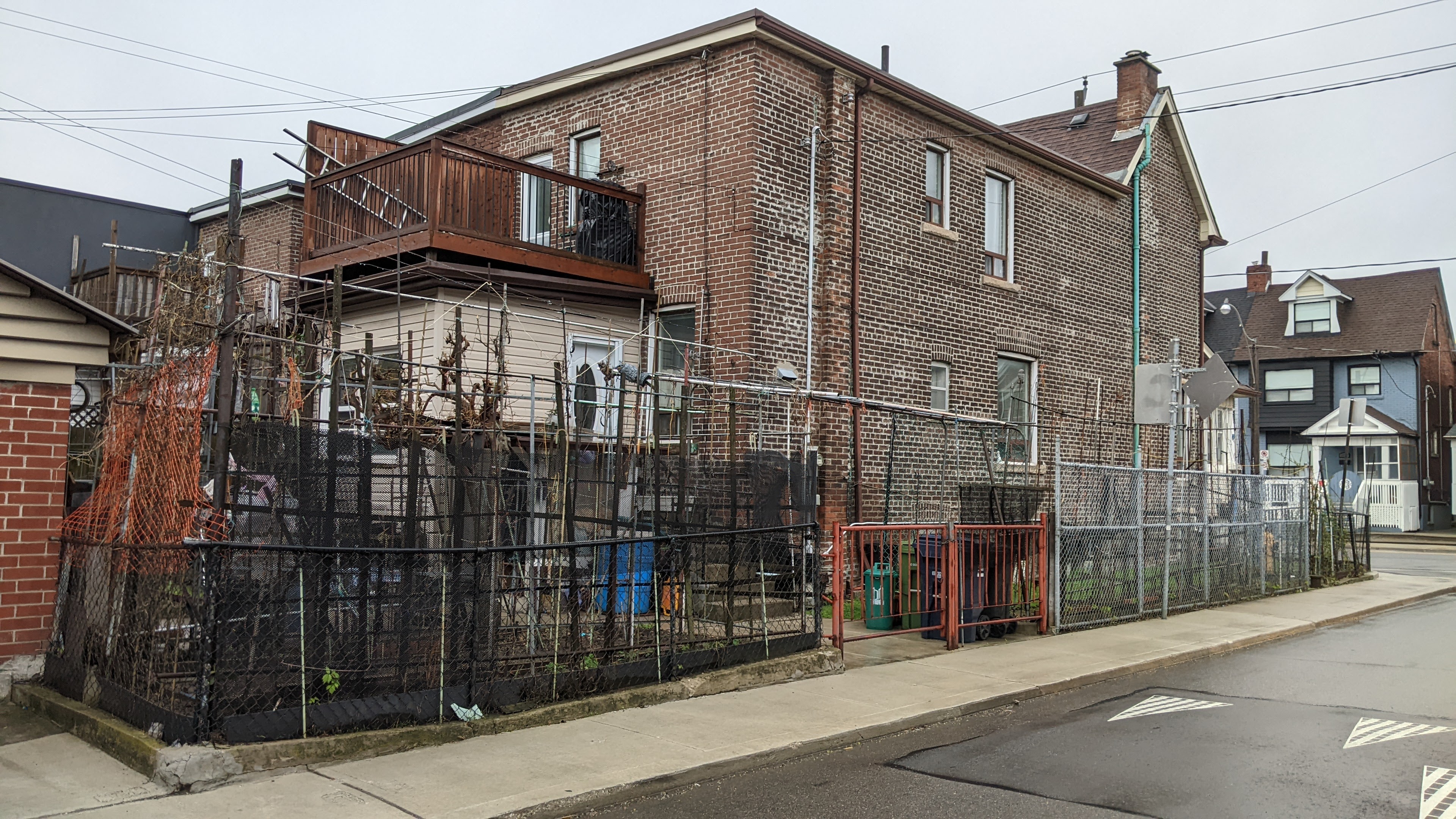
This work takes place in approximately my childhood neighbourhood about ten years ahead of me. Those ten years made a big difference: what was an immigrant working-class environment became middle class in only about twice as much time. While it has adult themes, the book is borderline “young adult” as there is little introspection. That said, the main characters lack of quality guidance and his role as a passive receptacle for the adult refuse around has melancholic weight to it. I was very glad to encounter my high school gym teacher and soccer coach immortalized on the page. Some characters you can’t make up.
Feminine descriptions: “peacock eyes and pouty lips”, “crimson, puffy, moist”, “droopy, loose-lipped, hound-doggish”, “snooty, racoon-like”, “perky, poodleish”, “her soft pastel fingers”, etc.
This is a pretty good tiny book. The author walks around London pondering social decline and the possibility of chaos. Accompanying amateur-smartphone photos are evocative. You get a taste of London culture, local history and the bleak vibes post-2008. The standard left-wing issues/critique/efforts xylophone is played eloquently. The book came out in 2011 in the aftermath of a decent amount of upheaval (the 2010 student protests and 2011 youth riots) and it occurred to me that the right-wing has dominated UK national politics ever since. How significant was this restive period beyond the well accounted for?
Great vocabulary: scabrous, grimoire, gallimaufry, hecatomb, parlous, cloacal, lachrymosity etc.
This is an OK tiny book of poetry. It’s cozy and comfortable. Think along the lines of “tangled in bedsheets and your soggy feet”. The word “sheets” (as in bed/hotel) is literally used at least five times. Also, we’re talking Canadiana to the point of a poem written from the perspective of someone watching their lover shovel snow (one of the better poems). Cross-country poetry. These Stephen Marche quotes are somewhat relevant:
“She also represents most fully the Canadian obsession with the landscape. It’s the great cliché of Canadian culture, but it’s a cliché because it’s true. There has never been a great portraitist in the history of Canadian art. Landscapes are everywhere.”
“The ‘imaginative problem’ of Canadian literature is always the setting. We are afflicted with the portraits of small towns, the portraits of farm life, the portraits of Maritime rivers, the portraits of the prairie. Landscape intrudes into even the most domestic of narratives.”
In Time’s Arrow time is moving backwards.
“The parallaxes of the stockyards shift and quake. Industry is coming to the city. Gas is cheap. Things move faster than they used to. The insane have been taken off the street; we don’t ask where they’ve disappeared to. Never ask. It’s better if you never ask. No longer the nomads, the nightrunners . . . Instead there is a burly altruism abroad. People all have jobs now, at the steel mill and the auto plant. They wash the wind. Just as they clean up all the trash and litter, they also clean up the earth and the sky, transmogrifying cars, turning tools, parts, weapons, bolts, into carbon and iron. They’ve really got to grips with their environmental problems, facing them squarely, with common purpose. Time for talk is over. There is no talk. Just action. To total sickness you bring total cure. Now there’s less room for thought and for feeling, and it seems a great tiredness is good for keeping people steady. Work liberates: Friday evenings, as they move off toward it, how they laugh and shout and roll their shoulders.”
“Yet in Toronto… well, Torontonians complain endlessly about congestion but refuse to give their political leaders the tools to do anything about it. They boast about the city’s ethnic diversity but don’t much mind if immigrants are warehoused in vertical ghettos. They aspire to live in a creative-class city with serious cultural ambitions, but only if they can pay Walmart prices.”
“Six decades after the beginning of its epochal postwar transformation, it’s fair to say that Toronto has become a very big city, and a somewhat accommodating city, but not a great city—at least not yet. Which is more than a little strange, because the GTA contains an abundance of talent and energy, tremendous wealth, and intimations of a distinctly Canadian cosmopolitanism. What’s lacking is the will to abandon the story Torontonians have always told themselves, which is that they can’t afford the things big cities need and crave, that they mustn’t exercise the political clout that naturally accrues to large urban regions, and that they shouldn’t manage growth in the intelligent way that the twenty-first century requires.”
 davidhadwen's website